
Quick answer
GRP ladders require far less maintenance than steel or aluminium, no repainting, no rust treatment, but they still need periodic checks. At minimum, inspect mounting hardware, rung surface condition, and structural connections every six to twelve months, more frequently in high-traffic or heavy-exposure sites. This article covers exactly what to check, what’s normal wear versus a genuine concern, and how this compares to the maintenance burden of a steel ladder over the same period.
Low maintenance doesn’t mean no maintenance
One of the most common things buyers hear about GRP ladders is that they’re low maintenance, which is accurate, but it sometimes gets rounded up to “maintenance-free” in conversation. That’s not quite right, and it’s worth being precise about the difference, because a site that assumes zero maintenance is needed can miss something that would have taken five minutes to catch early.
What’s genuinely true is that GRP eliminates the biggest maintenance burden that steel and aluminium ladders carry, corrosion treatment and repainting. What GRP still needs is periodic structural and hardware checks, the same category of maintenance any fixed access equipment requires, just a much shorter list than metal alternatives.
What to actually check
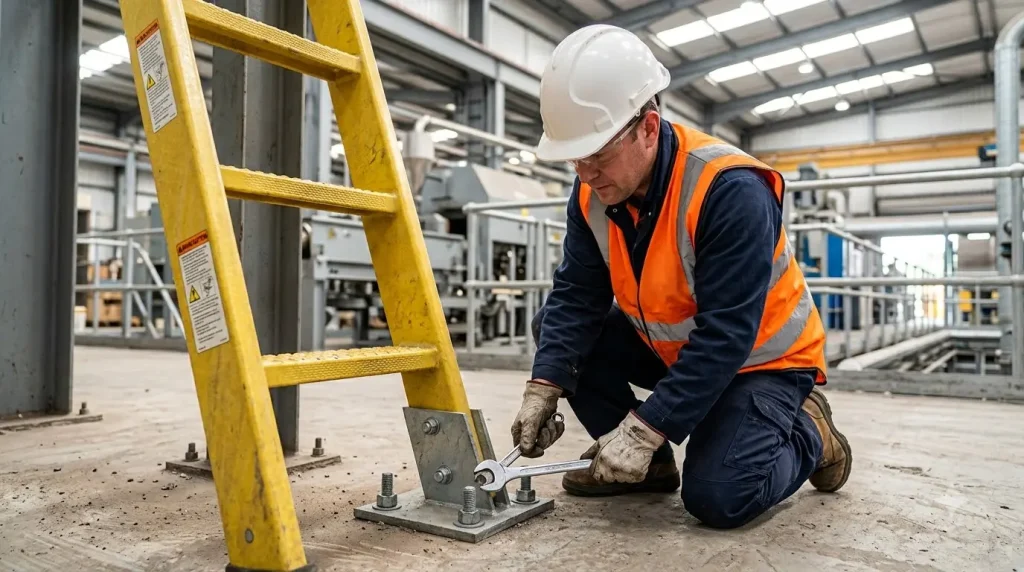
Mounting hardware and fasteners Even though the ladder body itself resists corrosion, mounting bolts, brackets, and hardware are sometimes still metal unless specified otherwise. Check these for tightness and corrosion at each inspection, this is usually the first thing to need attention on an otherwise low-maintenance installation.
Rung surface condition Anti-slip rung surfaces can wear down over years of heavy foot traffic, particularly on high-use ladders. Check for smoothing or wear on the rung surface texture, this affects grip and safety more than it affects the ladder’s structural integrity.
Structural connections Check that rung-to-stringer joints and any bonded connections remain solid, with no visible cracking, flexing, or separation. This is rare on a properly manufactured GRP ladder, but worth a visual and physical check as part of routine inspection.
UV surface condition In direct, sustained sun exposure over many years, even UV-stabilized resin can show gradual surface fading or slight chalking. This is largely cosmetic and doesn’t indicate structural weakening the way steel corrosion does, but it’s worth noting during inspection as a general age indicator.
Base and mounting point Same principle as the mounting hardware check, this is often where moisture collects regardless of ladder material, worth a specific look even though the ladder body itself won’t corrode there.
How often, realistically
For most industrial sites, a structured check every six to twelve months is reasonable, aligned with your site’s general HSE inspection schedule rather than as a separate standalone process. High-traffic ladders, or those on sites with heavy chemical exposure, marine environments, or continuous outdoor sun exposure, benefit from checks on the shorter end of that range.
This is worth comparing directly to steel: a steel ladder in the same environment typically needs active maintenance work, not just inspection, on a much tighter cycle, repainting or rust treatment every one to three years in humid or coastal UAE conditions, on top of the same structural inspection GRP requires. The GRP maintenance list is shorter, and critically, most of it is inspection rather than active treatment work.
What’s normal wear versus a real concern
Normal, no action needed: minor surface fading from UV exposure, slight rung surface smoothing after many years of heavy use, cosmetic surface marks from general handling.
Worth flagging for closer inspection: any visible cracking at a structural joint, flexing or movement in the stringer under load that wasn’t there before, loose or corroded mounting hardware, any change in how the ladder feels underfoot compared to when it was installed.
If you’re ever unsure whether something falls into the second category, it’s worth a quick call to whoever manufactured or supplied the ladder rather than guessing, particularly for a ladder that’s been in heavy or safety-critical use.
Frequently Asked Questions
Do GRP ladders need to be repainted? No. Unlike steel, GRP doesn’t require repainting for corrosion protection, this is one of the main maintenance advantages over metal ladders.
How often should a GRP ladder be inspected? A structured check every six to twelve months is reasonable for most sites, more frequently for high-traffic ladders or those in heavy chemical, marine, or continuous sun exposure environments.
Can UV exposure damage a GRP ladder over time? UV-stabilized resin resists degradation well, but very long-term sustained exposure can cause gradual cosmetic surface fading. This doesn’t typically indicate structural weakening the way steel corrosion does.
What’s the most common maintenance issue on a GRP ladder? Usually it’s not the GRP structure itself, it’s the mounting hardware, which may still be metal unless specified otherwise, and worth checking for corrosion or tightness at each inspection.
Where can I get a GRP ladder built for a low-maintenance UAE installation? EFG Composites manufactures GRP ladders at our facility in Ajman Free Zone, engineered for minimal maintenance in industrial, marine, and electrical environments. Visit our GRP Ladder Supplier in UAE page for full specifications and to request a quote.
Related reading
- GRP Ladder Supplier in UAE, full product page, specifications, and quote request
- How Much Does a GRP Ladder Cost in the UAE?
- GRP Ladder Standards and Safety Compliance Guide