
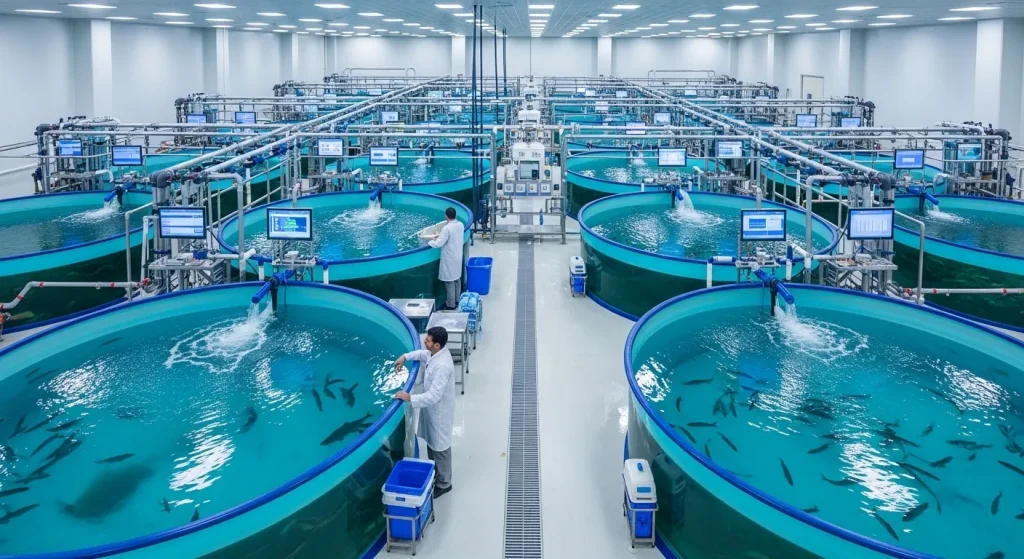
Aquaculture in the UAE is no longer a niche sector, it is becoming a strategic pillar for food security and sustainable production.
With increasing demand for locally produced seafood and government-backed initiatives supporting aquaculture, the industry is evolving rapidly. But while attention is often given to fish species, feed, and water systems, one critical factor is often underestimated:
Tank infrastructure.
The material used for fish farming tanks directly impacts:
- Water quality
- Fish health
- Operational efficiency
- Long-term costs
And this is exactly where GRP (Glass Reinforced Plastic) tanks are redefining modern aquaculture systems in the UAE.
The Real Demands of Aquaculture Systems
Fish farming environments are highly sensitive ecosystems.
Even minor inconsistencies in infrastructure can lead to:
- Disease outbreaks
- Reduced growth rates
- Increased mortality
- Financial losses
A high-performance aquaculture tank must provide:
- Chemical stability
- Structural durability
- Smooth, hygienic surfaces
- Resistance to corrosion
- Ease of cleaning and maintenance
Traditional materials struggle to meet all these requirements simultaneously.
Why Traditional Tank Materials Fall Short
1. Concrete Tanks
Concrete has been widely used, but it comes with serious limitations:
- Porous surface absorbs contaminants
- Difficult to clean and disinfect
- Prone to cracking over time
- Alters water chemistry
2. Metal Tanks
Metal structures introduce a different set of problems:
- Corrosion, especially in saline environments
- Rust contamination
- Requires coatings and frequent maintenance
3. Standard Plastic Tanks
While lightweight, plastic tanks often lack:
- Structural strength
- Long-term durability
- Resistance to UV degradation
GRP Tanks: Built for Aquaculture, Not Just Storage
GRP tanks are not just containers, they are engineered systems designed for controlled aquatic environments.
What Makes GRP Different?
GRP combines:
- Glass fiber reinforcement
- High-performance polymer resins
This creates a material that is:
- Strong yet lightweight
- Non-reactive
- Highly durable
- Corrosion-resistant
Key Advantages of GRP Tanks in Aquaculture
1. Non-Reactive Surface (Critical for Fish Health)
GRP does not interact with:
- Water chemistry
- Feed residues
- Organic waste
This ensures a stable and safe environment for aquatic life.
2. Superior Hygiene & Biosecurity
The smooth internal surface:
- Prevents bacterial buildup
- Reduces algae growth
- Makes cleaning faster and more effective
In commercial aquaculture, this directly translates to: Lower disease risk & Higher survival rates
3. Corrosion Resistance in Saline Conditions
In UAE aquaculture, especially marine farming:
- Saltwater accelerates corrosion in traditional materials
GRP is inherently resistant to:
- Salt
- Chemicals
- Biological waste
4. High Strength with Low Weight
GRP tanks offer excellent structural strength without the weight of concrete or steel.
This means:
- Easier transportation
- Faster installation
- Reduced structural load requirements
5. Long-Term Durability
GRP tanks are built to last.
They resist:
- UV exposure
- Temperature fluctuations
- Environmental stress
This makes them ideal for both indoor and outdoor aquaculture systems in the UAE.
Applications of GRP Tanks in the UAE
GRP tanks are widely used across different aquaculture setups:
Hatcheries
- Controlled environments for breeding and early-stage growth
Grow-Out Systems
- Large-scale fish production
Recirculating Aquaculture Systems (RAS)
- Advanced systems focused on water reuse and efficiency
Ornamental Fish Farming
- Requires high water clarity and hygiene
GRP Tanks in RAS Systems: A Perfect Match
RAS (Recirculating Aquaculture Systems) are gaining popularity in the UAE due to water scarcity.
These systems require:
- Precise water control
- Minimal contamination
- High hygiene standards
GRP tanks are ideal because they:
- Maintain water purity
- Support efficient filtration integration
- Reduce system failures
Customization: Designed for Performance, Not Just Capacity
Unlike generic tanks, GRP systems can be engineered for:
- Optimized water flow
- Integrated drainage systems
- Aeration compatibility
- Filtration system alignment
This allows fish farms to maximize efficiency and yield.
Economic Benefits: Looking Beyond Initial Cost
Many operators focus only on upfront costs, which is a mistake.
With Traditional Tanks:
- Higher maintenance
- Frequent repairs
- Shorter lifespan
With GRP Tanks:
- Reduced downtime
- Lower maintenance costs
- Longer operational life
Over time, GRP tanks deliver better ROI and operational stability.
Supporting UAE’s Food Security Vision
The UAE government is actively investing in:
- Sustainable aquaculture
- Local seafood production
- Advanced farming technologies
Infrastructure plays a key role in achieving these goals.
GRP tanks align perfectly with this vision by offering:
- Efficiency
- Sustainability
- Scalability
Installation & Operational Efficiency
GRP tanks simplify operations from day one:
- Quick installation
- Minimal site preparation
- Easy integration with existing systems
This reduces:
- Project timelines
- Labor costs
- Operational disruptions
Choosing the Right GRP Tank Manufacturer
Here’s the reality — not all GRP tanks are built for aquaculture.
What to Evaluate:
- Resin and fiber quality
- Structural design standards
- Experience in aquaculture projects
- Customization capabilities
- After-sales support
Poor-quality tanks can compromise the entire farming system.
Strategic Infrastructure Matters
For aquaculture operations that prioritize performance, hygiene, and long-term efficiency, working with a specialized
https://efgcomposites.ae/grp-fish-farming-tanks-manufacturer-in-the-uae/
ensures that your infrastructure supports growth — not limits it.
Final Thoughts
Aquaculture success isn’t just about fish, it’s about the system that supports them.
And tank material is one of the most critical components of that system.
GRP tanks offer:
- Stability
- Durability
- Hygiene
- Efficiency
Which makes them not just an upgrade, but a necessary evolution for modern aquaculture in the UAE.